Welcome to the MOSL Book Challenge


Showing posts with label Olympics. Show all posts

Monday, August 15, 2016

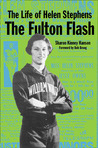
The Life of Helen Stephens: The Fulton Flash by Sharon Kinney Hanson

The Life of Helen Stephens: The Fulton Flash
Helen Stephens set a world record when she won the gold medal for 100 meter sprint at the 1936 Berlin Olympics set in Nazi Germany. The Great Depression and World War II prevented her from returning to the Olympics. However, Stephens enjoyed an incredible athletic career which spanned into her golden years. Among other things, she was the first woman to manage a professional basketball team.  She championed women in the pursuit of gaining equal athletic opportunities. Her biography is fascinating because it captures the drama of Stephen’s own personal journey beginning in rural Fulton, MO, alongside the development of the modern Olympics, implementation of Title IX, and evolution of US gender perceptions. After her Olympic win, Stephens was accused of being a man – prompting random gender testing for athletes.   She was later frequently consulted on this topic.

Helen Stephens held a 3o year career as a librarian at the Defense Mapping Agency Aerospace Center in St. Louis – a fact that I, as a librarian myself, very much appreciate. Pam Miner, a professional archivist at the Missouri State Archives assisted in compiling Stephen’s enormous collection of correspondence, newspaper articles, and ephemera which were accessed in researching this biography. Many of these materials are now part of the University of Missouri’s Historic Manuscripts collection. Sharon Kinney Hanson portrays Stephens as warm, witty, dependable, and as an international diplomat for women in sports. Helen Stephens passed away in 1994 having led an fantastically full life.

262 pages

Tuesday, September 16, 2014

The Boys in the Boat:Nine Americans and Their Epic Quest for Gold at the 1936 Berlin Olympics by Daniel James Brown

Most of us are familiar with the story of Jesse Owens at the 1936 Olympics, held in Nazi Germany. Not so with the U. S. Rowing team, who took gold in the 8-oar crew race. The boys in the boat were from the University of Washington, not one of the elite East Coast crews. They were farmers and loggers, boys who were mostly poor and poorer. They are still sometimes referred to as the greatest crew in U. S. history.

This history reads like a novel. It tells the story of Joe Rantz, who sat in the 3rd seat in the rowing shell. His mother died when he was three, and he was abandoned by his father at two different times in his life; once when he was but 10 years old, and again for good when he was 15, left to make his own way in the world with no family, no home, no money.

There were no scholarships in rowing when he entered the University of Washington in 1933, but securing a place on crew would give him the opportunity for a job that would help him keep himself in school.

The other part of the book is the many catastrophic events rocking the country during the 1930's, and the rise of the Nazi party and Adolph Hitler in Germany. The Great Depression was in full throttle; the Dust Bowl was devastating agriculture, and cataclysmic weather events were coming fast and furiously. Against this backdrop, the story of nine young men overcoming seemingly insurmountable odds to defeat the German and Italian teams that had all the resources they needed to become the best rowers in the world is inspiring and awe-inspiring.

417 pages