The Lunar Chronicles is a YA Science-Fiction series based on fairytale retellings. They aren’t full retellings, as they vary from the initial stories to a good extent, but you’ll see aspects of each fairy tale, some more fractured than others, pop up here and there throughout the stories and series.
The series as a whole is exciting and action-packed with creative technology, unique characters who are easy to love, and terrible villains whom you will love to hate.
There are 4 novellas, 3 of which aren’t mandatory, but if you love the series, you’ll want to read them for the small bits of insight they bring to the series and world.
Fairest is the 4
th novella, and it should be read (in my opinion), as part of the series. Technically, it’s not part of the progressing storyline, but it provides so much useful insight into the villain of this series, that it would be a shame not to read it before the final book. Read it after
Cress and before
Winter.
Total = 8 books with 2,741 pages
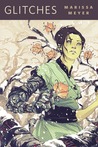 Glitches
 by
Marissa Meyer (Novella 0.5)
My rating:
4 of 5 stars
This novella explores Cinder’s life when she first came to live with the Linh family. It’s heartbreaking and gives you a glimpse of a younger Cinder.
Pages: 32
 The Little Android
 by
Marissa Meyer (Novella 0.6)
My rating:
4 of 5 stars
This is a creative retelling of The Little Mermaid. It’s completely separate from the books, but it does have a Cinder cameo. It’s sad but good.
Pages: 35
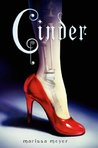 Cinder
 by
Marissa Meyer (Book 1)
My rating:
5 of 5 stars
This is a retelling of Cinderella, complete with Cyborgs, and androids, and a lunar plague. Oh, my!
Cinder is a cyborg who works as a mechanic in the marketplace, but all of her wages go to her evil stepmother, since cyborgs have no rights. When the crown prince brings by his android to the marketplace to be fixed, Cinder hides her true self, and the story spirals into chaos from there.
If you’re not sure about the series, read this book first. Once you love it, you can go back and read Glitches (0.5) and The Little Android (0.6) at any point.
Pages: 448
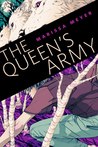 The Queen's Army
 by
Marissa Meyer (Novella 1.5)
My rating:
4 of 5 stars
This novella provides more of the backstory on Wolf. I read it before Scarlet. It’s also a teaser novella to motivate you to read the next book, so don’t expect a complete story. It does cut off right at a point where you hope for more, which isn’t a problem if you already have book 2.
Pages: 18
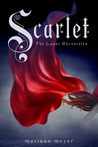 Scarlet
 by
Marissa Meyer (Book 2)
My rating:
5 of 5 stars
This is a sci-fi adaptation of Little Red Riding Hood. The focus shifts to a new heroine, Scarlet, a farm girl whose grandmother has gone missing. Scarlet is not sure whether or not the lunar guy who was genetically modified into part wolf is to be trusted or blamed for that.
This story is a continuation from book one and still includes most of the characters you loved from Cinder. It's a fantastic sequel, every bit as enjoyable and interesting as the first book.
Pages: 512
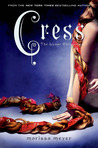 Cress
Cress by
Marissa Meyer (Book 3)
My rating:
5 of 5 stars
Cress is the futuristic version of Rapunzel. Cress has been trapped for almost her whole life inside a satellite, tasked with the job of spying on Earth for the head thaumaturge (evil government bad guys with mind control powers) of Queen Levana.
Scarlet and Cinder attempt to rescue Cress from her isolation, but things go wrong. Very wrong. This is another fantastic book, and Cress is a refreshingly different heroine.
Pages: 592
 Fairest
 by
Marissa Meyer (Novella 3.5)
My rating:
5 of 5 stars
From a fairy tale standpoint, this aligns with Maleficent’s story, but it’s far different from that and well worth reading for some excellent insight and background to Queen Levana, who is a fantastically evil villain.
She's not nearly as redeemable as Maleficent, but I was fascinated by the depth of her issues and self-delusions.
Pages: 272
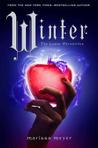 Winter
 by
Marissa Meyer (Book 4)
My rating:
5 of 5 stars
Ah, Snow White, re-imagined in the most unexpected way possible, complete with Winter, a main character who is mentally unbalanced and eccentric, but extremely lovable.
This is how you end a series: not with a whimper but a bang.
Pages: 832
 Stars Above by Marissa Meyer


