Welcome to the MOSL Book Challenge


Showing posts with label slavery. Show all posts

Friday, October 15, 2021

Red Rising by Pierce Brown

So this is the second book to make me cry today..and it's the beginning of the book. 
As soon as I found out there was a school on Mars:

So like....am I the only one who's like....this has Attack on Titan training camp energy...just me...cool. I'll just listen to the soundtrack with this...
Ohhhh some of these things are sketch and problematic
Ok so more than some of these things are problematic....
Did my brain compensate for the gruesomeness and trauma by saying "God, it's brutal out here" yes.
Alexa play Teenagers.
If you can get past the violence and like...despicable things that are happening to the characters--it slaps. 
It's like Hunger Games but with less direct killing, and more violence/cruelty against women and scheming and some teamwork involved.
416 Pages


Sunday, September 12, 2021

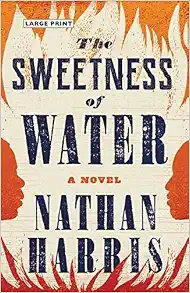
The Sweetness of Water by Nathan Harris

The Sweetness of Water by Nathan Harris

As the Civil War draws to a close, Landry and Prentiss, brothers born into slavery, take refuge on the homestead of George and Isabelle Walker as they try and make their way north, seeking their mother, who had been sold years ago. When George stumbles across the boys, he hires them to help him install a crop of peanuts, hoping the work will numb the grief of the loss of his only child to the war. 


The forbidden romance of two Confederate soldiers also plays out in the town of Old Ox. The men meet in the woods and, when their secret is discovered, chaos ensues and culminates in murder. The repercussions are greater—for both of them—than either could have ever guessed.


In the aftermath of this grief and chaos, Isabelle is thrust to the forefront as the unlikely leader, whose strength results in a vision set to heal both the land and its citizens.


368 pages.

Thursday, June 4, 2020

Historical Fiction Reads

It's been a while since I posted anything, so I'll try to catch up on what I've read the past several weeks!

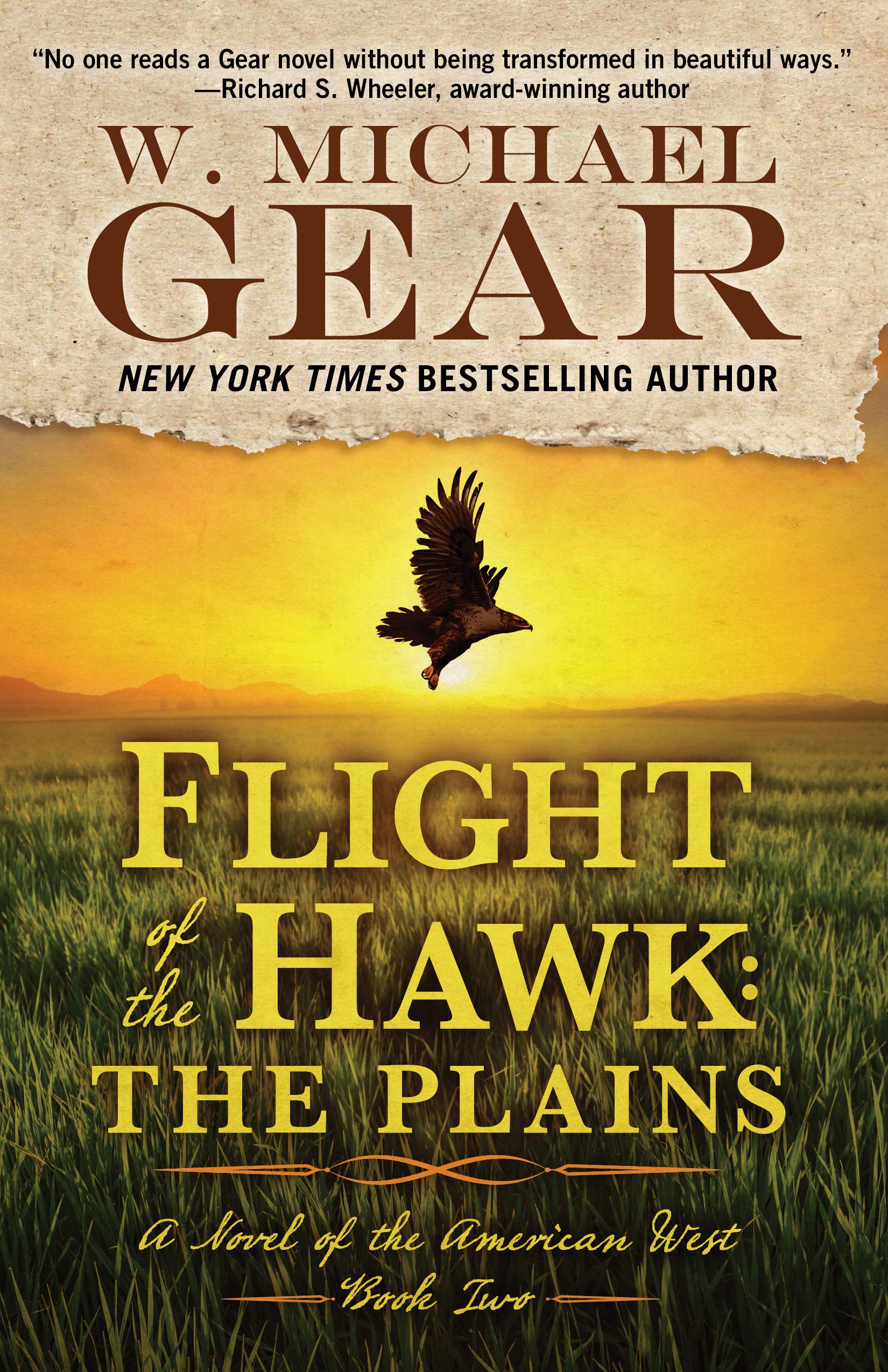
Flight of the Hawk: The Plains (A Novel of the American West ...
Flight of the Hawk: The Plains by W. Michael Gear

The second book in the series, Where Tylor leaves the Missouri River to set off into the plains, still running from the bounty on his head. I didn't like this one as much. It was a lot of descriptions of grass, and not the actual story didn't pick up until the very end. The introduction of Native American characters made it feel more like the Gears' People books, which is not what I was looking for in this one. Still, I enjoyed the return of McKeever.

281 pages


People of the Fire by W. Michael Gear

People of the Fire by W. Michael Gear and Kathleen O'Neal Gear

I've been enjoying these books. They are a bit predictable, but I enjoy reading about the way Native Americans lived. I love the fact that this series is written by an archaeologist couple, and you can definitely tell they've done the research and been on the digs. The final scene with the wildfire is excellent! This is a fun escapist read to America's distant past.


480 pages


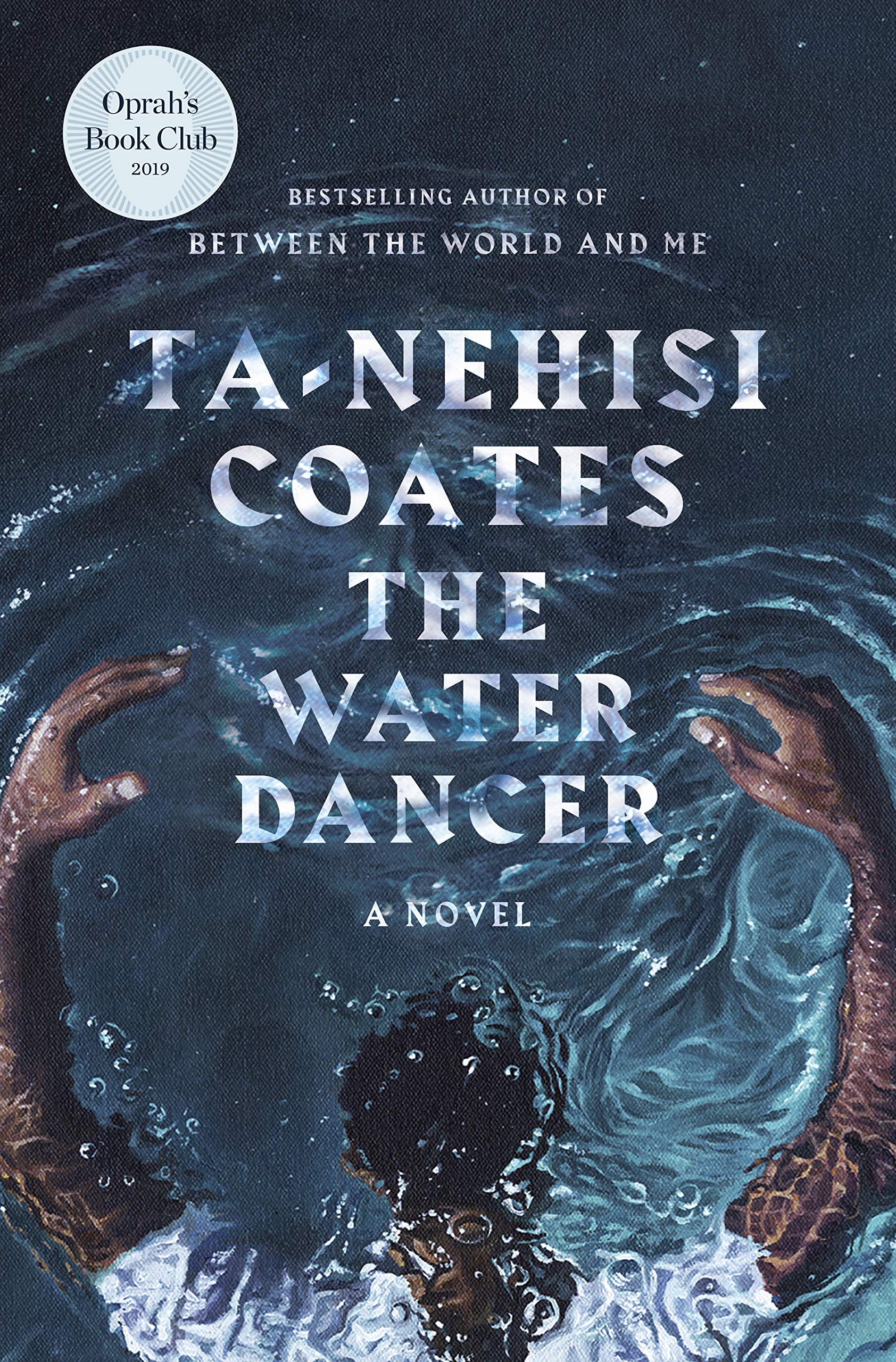
Amazon.com: The Water Dancer (Oprah's Book Club): A Novel ...

The Water Dancer by Ta-Nehisi Coates

More of an alternative history novel, as the main characters use magic conduction, but still a solid depiction of the bigotry of southern aristocracy and injustice of slavery. Definitely check out the audiobook of this one, because the reader is amazing! He even sings the work songs, which saves me the trouble of looking them up on Youtube. I love historical fiction, because it leads me to look up and learn about history I didn't know about.

403 pages

Amazon.com: Tales of the South Pacific (9780449206522): Michener ...


Tales of the South Pacific by James A. Michener

I remember reading this one in middle school, but I did NOT pick up on half the history or the adult references as I did this time around. This book is so good, I felt like I was actually touring around the Pacific Islands alongside these men. Michener does a great job at depicting the boredom of officers, the interactions with islanders, and of course, the horrors of war-which makes sense, I suppose, since he lived it. I feel like too many novels about WWII focus on the European theater, so it's nice to get the other perspective. A true masterpiece!

384 pages


P.S. Did you know atabrine (the yellow malaria tablets passed out by Atabrine Benny) is closely related to chloroquine?

Monday, February 3, 2020

The Life of Frederick Douglass: A Graphic Narrative of a Slave's Journey from Bondage to Freedom by David F. Walker

The Life of Frederick Douglass: A Graphic Narrative of a Slave's Journey from Bondage to Freedom by [Walker, David F.]

Wow. So I've heard of Frederick Douglass from history class. Famous abolitionist and writer, right? He is so much more than that. He was a slave, a father, a runaway, a freedman, an orator, a poet, a newspaper publisher, and the most photographed man of the 19th century. This book takes you through his entire life story, and it is a fascinating one. The art is beautiful, and the author clearly did a lot of research to make the fullest story possible. It offers a very honest and revealing look into the realities of slavery in the early 1800's. I'm probably going to go pick up Douglass' autobiographies now.

Amazing! Read this. Fascinating history.

192 pages

Wednesday, July 31, 2019

The Last Runaway: a novel by Tracy Chevalier

Honor Bright, having been jilted by her fiancée, accompanies her sister to America, where she is to be married. It was a difficult voyage; she was ill for the entire trip, and knows she can never go back to England again. Her sister catches yellow fever and dies before they reach Ohio, where she is to be married. Honor stays with her sister's fiancée until she meets and marries Jack Haymaker.

This being 1850, and Honor being a Quaker, she becomes involved in helping runaway slaves, despite her husband's (and his family's) objections. They order her to stop hiding slaves, even threatening to take her baby away and disown her. Yet Honor must remain true to her "inner light".


353 pages

Tuesday, January 31, 2017

Underground Railroad by Colson Whitehead


Cora, a teenage slave, lives  on a Georgia cotton plantation. Her mother escaped when Cora was a child, and was never re-captured. Cora has had to fend for herself ever since. A new slave to the plantation (Caesar) asks her to escape with him. Even though her life is a living hell, she is afraid of what will happen if she gets caught trying to get away, so she refuses. However, when she is beaten for defending a smaller slave who is being severely punished, she decides to go with Caesar anyway. The two of them escape on the Underground Railroad, which in this novel is a real, not figurative, railroad that was built underground. They escape to South Carolina, where they live for a time as though they are free.

However, the fact that her mother escaped never to be found has caused a festering resentment in her owner. He is determined not to be foiled by another slave, and hires Ridgeway, a ruthless slave catcher, to find her and bring her back. She suffers many times over; every time she thinks she is settled and safe, Ridgeway shows up and she must flee again. In the process, many people who help her suffer cruel punishments.

This books reminds us of a part of our history that we would prefer not to remember.


322 pages

Saturday, October 22, 2016

Extraordinary Black Missourians: Pioneers, Leaders, Performers, Athletes, and Other Notables Who've Made History by John A. Wright, Sr. and Sylvia Wright

(Posted for Paul Mathews)

Missouri TV personalities such as Julius Hunter, news anchor, journalist, and author, musicians W.C. Handy and Count Basie, and politician Freeman Bosley, Jr. are some of the black Missourians who are in this wonderful book.  240 pages.

Sunday, February 22, 2015

The Invention of Wings by Sue Monk Kidd

Sarah Grimke grew up in Charleston, South Carolina during the nineteenth century. Her family was part of the privileged, wealthy,  slave-owning class; her father was a renowned judge, and they were considered at the top of the planter class, the elite of society. Yet at a young age, Sarah somehow became opposed to slavery. As a young woman, she became a Quaker, moved north, and became an abolitionist. Later, she and her younger sister, Angelina, became the first female abolition agents in America, and among the earliest feminist thinkers.

This is a fictionalized story about Sarah and a slave girl given to her on her eleventh birthday to be her personal maid. Hetty was the same age as Sarah, and their stories are told in alternating chapters of the book. The story of Sarah is based very closely on the actual historical events. However, the story of Handful (Hetty's slave name) is largely fiction.  The two parallel stories draw a stark contrast between the lives of slaves, and those who enslaved them.

This is a powerful book about the ways in which societies structure themselves on power and privilege - and then lie to themselves about the injustice inherent in these systems.


384 pages

Wednesday, December 17, 2014

Freeman by Leonard Pitts


Freeman
Have you ever wondered exactly how average people responded to emancipation when the American Civil War ended?  Slavery was an inherently American institution, which was so firmly interwoven within the economy, the society, the psychology as well as religious, philosophical, and ethical mores of the country, and was suddenly it was over.  It must have been overwhelming in many ways! Indeed, scholars have and can continue to spend their entire careers examining the period, its impact then, and the continued effect upon this country.
It is well known that many of the formerly enslaved hit the road  -- everywhere in land, all manner of black folks set out trying to find lost mothers, fathers, children, siblings -- lost lives.  It is also well known that this is the period wherein many schools sprang up throughout the South to educate the formerly enslaved, which delighted the knowledge starved blacks and inflamed those who felt this upset the natural order of things. Leonard Pitts, Jr., a Pulitzer Prize-winning columnist for the Miami Herald, has taken these two elements and fashioned a remarkably powerful piece of historical fiction that depicts just how it must have been for some.
Sam Freeman sets out from Philadelphia, where he has been working in a library since his discharge from the Union army, and begins walking to Mississippi to find his wife, Tilda.  He has not seen her in 15 years, and like most on similar searches, he has no idea if she is alive or dead, if she has taken another husband, been sold elsewhere.  He knows only that he loves her and must be with her, if it is at all possible.
Prudence Cafferty Kent, a white widow from Boston, along with her black foster sister Bonnie, head to Buford, Mississippi to open a school.  These are the main characters, and their story -- their quest for redemption, will capture you and keep you enthralled until the novel concludes.  Hopefully, it will keep its readers thinking about the damage of America's peculiar institution long after completion.   

432 pages, 15 hours, 46 minutes

Thursday, December 11, 2014

Yellow Crocus by Laila Ibrahim

Product DetailsThis is a haunting story of love and friendship set in antebellum Virginia and Ohio.  The baby Lisbeth is handed over to Mattie, her black, enslaved wet nurse, moments after birth, which begins the bond that is carried through both women's lives. Elizabeth is the privileged daughter of southern plantation owners, and Mattie is, of course, enslaved. Mattie cares for and loves the child just as she loves her own, and Lisbeth spends more time with Mattie than her own distracted mother. As Lisbeth grows into womanhood, Mattie finds that she must seek freedom for her own family and she escapes, which produces some of the most harrowing scenes in the text. Lisbeth later, upon the realization of just how horrifying slavery really is, escapes herself with an abolitionist minded husband. Both women find themselves in Ohio, where the story takes on a melancholy tone, as race and class still impact their existence.

252 pages

Thursday, October 30, 2014

Celia, A Slave by Melton A. McLaurin

On June 23, 1855 a 19-year-old slave named Celia was raped several times by her owner, Robert Newsom. Newsom lived in Callaway County, Missouri, and had bought Celia from a slave  owner in Audrain County in 1850. She was 14 years old, and according to some accounts, he raped her on the way back to his own farm. In the following 5 years, he moved her into a cabin not far from his house, and called her his 'concubine'. She gave birth to 2 children, at least one of them the son of Robert Newsom.

At some point, Celia became involved with another of Newsom's slaves, a man named George. In the spring of 1855, Celia discovered she was pregnant again. George insisted she put an end to the sexual exploitation she was being subjected to by her owner. She went to the Newsom's daughters to beg them to get him to stop. She also begged Newsom himself to leave her alone, at least while she was 'sick'. The result was his visit to her cabin on June 23. She tried to escape, but when he cornered her and forced himself on her, she clubbed him over the head with a large stick, killing him. She then burned his body in her fireplace.

She was eventually found out and taken to Fulton to be tried for murder. She was found guilty by an all-male jury,  and  hanged. McLaurin uses her story to focus on the role of gender, exploring how female slaves were sexually exploited as slaves, why white women couldn't stop the abuse, and male slaves couldn't defend slave women. He also looks at the way the legal system was used to justify slavery.  In the end, this is a compelling narrative of one women pushed beyond the limits of her endurance by an inhumane system.

195 pages

Monday, October 27, 2014

The Secrets of Mary Bowser: A Novel by Lois Leveen

This novel is based on the remarkable true story of Mary Bowser, a young woman who was enslaved in antebellum Richmond, Virginia by the wealthy Van Lew family.  Bet Van Lew, the headstrong daughter of the family had strong abolitionist sentiments, which led her to emancipate Mary and her mother but the law forbade emancipated slaves to live within the state.  Mary traveled to Philadelphia to be educated, and her mother, wishing to remain with her still enslaved "husband" pretended to still be in bondage.  During the period of her life in Philadelphia, her mother passed away, which led Mary to feel a higher calling than that of the bourgeois free blacks she saw around her in Philadelphia.  With the aid of friends who worked with the Underground Railroad, Mary returned to Richmond to pose as an enslaved house girl in order to spy in the home of none other than Confederate States president, Jefferson Davis.  A memorable story of a brave woman history had forgotten.   496 pages
Product Details


Monday, April 28, 2014

Slave Narratives by Federal Writers Project Missouri


(Posted for Paul Mathews)

Realistic account of slavery in Missouri and the impact it had on the United States.  Working in the fields and in the big house sometimes from sunrise to sunset.  After the war, being able to buy and work their own 40 acres that they bought for twenty dollars.  161 pages.

Tuesday, December 31, 2013

12 Years a Slave by Solomon Northrup

In 1841, Solomon Northrup was a free Negro living with his wife and three children in Saratoga, New York.  He makes his living as a carpenter and fiddle player. He is talked into going on tour with a circus as a fiddle player; he is promised a good deal of money for doing so. However, after traveling to Washington, D. C., where the circus supposedly is based,  he is drugged and awakes to find himself chained to a floor.

He has been kidnapped, and is subsequently sold into slavery in Louisiana, where he spends the next twelve years. He experiences all the inhumanity of the misbegotten institution that lead up to the Civil War. He finds some slave owners to be more humane than others, but still is treated as a possession, not the man he has always considered to be.

He is eventually rescued by a businessman from his hometown, and re-united with his family. This memoir was written in 1853, shortly after his return to his home. The story has recently been made into a movie, and I wanted to read the book before I saw it. It is a very real reminder of our not-so-distant past.


125 pages

Monday, May 27, 2013

Island Beneath the Sea by Isabel Allende

I've enjoyed several books by this author focused on life in the Americas.  This one follows Zarite, known as Tete, the daughter of an African mother she never knew, and a white sailor, as she grows up in slavery in Saint-Domingue in the 1770s.  She is purchased by Toulouse Valmorain, to serve in his house and later as his concubine.  The book conveys well the horrid conditions of slavery in the sugar cane plantations that leads to a slave revolt.  When the Valmorain family escapes to Cuba, and later New Orleans, Tete accompanies the family and eventually gains her freedom.  Characters are connected in surprising ways, in some cases in ways that stretch credulity, but the overall picture of the time is very colorful, and you have to root for Tete to pull through.  Translated from the Spanish.  457 pages.