
Monday, February 28, 2011
"Wicked Intentions" by Elizabeth Hoyt

The Mysterious Affair at Styles by Agatha Christie
I decided to read this book first, because it was available on Project Gutenberg and I wanted to try downloading a book from there; and second because someone recommended I give Hercule Poirot another chance. (I had last read a book involving Poirot about 20 years ago and found the character tiring.) The Mysterious Affair at Styles featuring Poirot and Arthur Hastings had some false leads with plenty of suspects, but in the long run I didn't really care who killed Emily Inglethorp. I won't go so far as to agree with Agatha Christie's assessment of Poirot as a "detestable, bombastic, tiresome, ego-centric little creep", but he also won't make my "Top Ten List of Favorite Fictional Detectives--Professional or Amateur". From the Christie realm, I will stick with Miss Marple. 212 p.
The Murder Room by Michael Capuzzo
This remarkable book, subtitled: The Heirs of Sherlock Holmes Gather to Solve the World's Most Perplexing Cold Cases is hard to describe.
It’s non-fiction written by a journalist. Maybe the forward summarizes this book best. The author, Michael Capuzzo, quotes both E.O. Wilson’s Voice of the Species and King Arthur and the Knights of the Round Table:
In the beginning when all is lost, mankind needs the right three men...the chieftain, the warrior, and the shaman...the king, the knight, and the wizard.
The reader gets to know three men, virtues and vices, the retired FBI agent, Bill Fleisher, the forensics artist, Frank Bender, and the criminal profiler, Richard Walter. The crime solvers are members of the real-life Vidocq Society, partners in solving often brutal murders, and their exploits read like crime fiction.
The author is the story-teller here and his prose is sometimes lyrical and sometimes practical. I actually stopped often while reading to reflect that the stories told were actual crimes these men solved. If the style was strictly practical I don’t think I could have finished reading the brutal facts of the crimes and the terrifying analyses of serial killers. Definitely not reading for the faint of heart; remember it is non-fiction. I thought it was a fascinating story. 448 pages.
It’s non-fiction written by a journalist. Maybe the forward summarizes this book best. The author, Michael Capuzzo, quotes both E.O. Wilson’s Voice of the Species and King Arthur and the Knights of the Round Table:
In the beginning when all is lost, mankind needs the right three men...the chieftain, the warrior, and the shaman...the king, the knight, and the wizard.
The reader gets to know three men, virtues and vices, the retired FBI agent, Bill Fleisher, the forensics artist, Frank Bender, and the criminal profiler, Richard Walter. The crime solvers are members of the real-life Vidocq Society, partners in solving often brutal murders, and their exploits read like crime fiction.
The author is the story-teller here and his prose is sometimes lyrical and sometimes practical. I actually stopped often while reading to reflect that the stories told were actual crimes these men solved. If the style was strictly practical I don’t think I could have finished reading the brutal facts of the crimes and the terrifying analyses of serial killers. Definitely not reading for the faint of heart; remember it is non-fiction. I thought it was a fascinating story. 448 pages.
Plague of Doves by Louise Erdrich and The Master Butchers Singing Club by Louise Erdrich
I doubled-up again this month with two books by one author, Louise Erdrich. I found Plague of Doves (2008, 313 p.) on a B&N discount table. After finishing it, I reread The Master Butchers Singing Club (2003, 389 p.), a novel I fell in love with on a plane trip several years ago.
Louise Erdrich’s books are narrated by amazing characters that mirror her ancestry, German and French/Ojibwa, and small town North Dakota near tribal reservations where she grew up.
In Erdrich’s books, the narrative chapters move back-and-forth between the present day and the past, fiction and legend, lyrically weaving the interconnection of the multiple narratives. As one character says: It’s all blood here.
In Plague of Doves, Evalina (and the reader) comes lately to the revelation that her beloved Mooshum’s (Grandfather) tales are really the sad oral history of miscommunication between Native Americans and immigrant settlers of the upper Midwest.
The Master Butchers Singing Club contains the most vivid description of caring for a dying person that I have ever read. A second reading did not diminish the power of the description of Delphine and Eva’s nonverbal bond.
Louise Erdrich’s books are narrated by amazing characters that mirror her ancestry, German and French/Ojibwa, and small town North Dakota near tribal reservations where she grew up.
In Erdrich’s books, the narrative chapters move back-and-forth between the present day and the past, fiction and legend, lyrically weaving the interconnection of the multiple narratives. As one character says: It’s all blood here.
In Plague of Doves, Evalina (and the reader) comes lately to the revelation that her beloved Mooshum’s (Grandfather) tales are really the sad oral history of miscommunication between Native Americans and immigrant settlers of the upper Midwest.
The Master Butchers Singing Club contains the most vivid description of caring for a dying person that I have ever read. A second reading did not diminish the power of the description of Delphine and Eva’s nonverbal bond.
Port Mortuary, by Patricia Cornwell

audio: 12.5 hours
print: 512 pages
All Over But the Shoutin' by Rick Bragg

An entertaining 329 page memoir of one of our nation's Pulitzer Prize winning journalists. In this book Bragg tries to cover his life with a "no-hold's barred" attitude from birth to the mid-1990s. He looks back at the good, the bad and the ugly of living hard and hard living in the poor white South and abroad-with the "poor white Southerner" chip on his shoulder.
Team of Rivals
By Doris Kerns Goodwin
Imagine, it's late 1860/early 1861 and Abraham Lincoln has to pick a cabinet to help him run the crumbling union. Who does he pick? Friends and allies who might further fracture an already weak union? Or does he pick rivals who might not have the same political sensibilities and the President Elect but still want to see the union thrive?
Lincoln picks the latter much to the chagrin of political allies. The book Team of Rivals walks the reader thru Lincoln's decisions and shows how this team helped piece back together the union.
For anyone who's interested in Lincoln the man this book is a must read it delves deep into what made him tick.
944 Pages
Imagine, it's late 1860/early 1861 and Abraham Lincoln has to pick a cabinet to help him run the crumbling union. Who does he pick? Friends and allies who might further fracture an already weak union? Or does he pick rivals who might not have the same political sensibilities and the President Elect but still want to see the union thrive?
Lincoln picks the latter much to the chagrin of political allies. The book Team of Rivals walks the reader thru Lincoln's decisions and shows how this team helped piece back together the union.
For anyone who's interested in Lincoln the man this book is a must read it delves deep into what made him tick.
944 Pages
Sunday, February 27, 2011
"Daring the Moon" by Sherrill Quinn

Saturday, February 26, 2011
When the Game Is Over It All Goes Back in the Box by John Ortberg
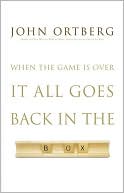 Using his self-deprecating humor and excellent storytelling abilities, John Ortberg reminds us that it isn't the "stuff" we gather that matters, it is what we do with our lives that counts. I especially appreciated his chapter on contentment called "More Will Never Be Enough." In it he tells the story of a spiritual seeker who interrupted his busy life to spend a few days in a monastery. "I hope your stay is a blessed one," said the monk who showed the man to his simple cell. "If you need anything, let us know, and we'll teach you how to live without it."
Personally, I prefer Ortberg's books God Is Closer Than You Think and If You Want to Walk on Water, You've Got to Get Out of the Boat. But When the Game Is Over It All Goes Back in the Box has a good message, too, and is well worth to reading. 256 p.
Wednesday, February 23, 2011
Spider Bones / Kathy Reichs
Reichs' background and experience are evident in this new installment of her forsensic mystery series about protagonist Temperance Brennan. The mystery is intricate, yet the resolution is plausible, and only once or twice does the narrative bog down in expository prose (I skimmed those parts!). The setting is mostly Hawaii, which was refreshing to read about this time of year. Having been there, I enjoyed being able to picture the setting. Nicely paced, with decent character development, better than the TV show now based on this series. 302. p.
Monday, February 21, 2011
Johnny One-Eye, by Jerome Charyn
A quite unusual tale of the American Revolution, as told by Johnny One-eye, bastard son of a famous New York City Madame and possibly Gen. Washington himself. At times comic, at times romantic, Johnny serves as inept double agent and observer of the British occupation of Manhattan during the war. The historical detail is quite colorful, as are the larger than life characters of this story. 475 p.
Sunday, February 20, 2011
"Wicked All Day" by Liz Carlyle

Star Wars: Force Unleashed II, by Sean Williams

Many sci-fi books are adding a dash of romance, the author of this book did it with more finesse than Star Wars: ... Vortex.
audio: 10.5 hours
print: 336 pages
You better not cry, by Augusten Burroughs

Curious cover, great things said about the author. I wanted to like this. I tried, but mostly failed. What am I missing, folks?
The author narrates in the audiobook, which was part of the problem. His delivery got on my nerves in the first 5 minutes. Augusten's pacing and emphasis just don't get along with me. The remainder of the book went by painfully - so much so, that i cheated and listened to it at 1.5x speed. I guess this is part of his series of memoirs, where he recounts some scary, some humorous, and some rather serious tales about alcoholism and going sober, promiscuity and comfortable married life, loving and letting go. The stories presented here revolve around the common theme of Christmas.
audio: 6 hrs
print: 224 pages
Saturday, February 19, 2011
Red Blues: Voices from the Last Wave of Russian Immigrants
 The authors of this book, Dennis Shasha and Marina Shron, set out to chronicle the personal struggles of Russian Immigrants who came to the U.S. from the late 1970's to the present. They chose Russians from a variety of ethnic backgrounds and from many different walks of life. These stories are first person accounts of life in Russia, what it was like to live under a totalitarian regime and what sort of changes came to their everyday lives under the policy changes of perestroika.
Most of these people were (and frequently still are) professionals in some field. Doctors, lawyers, scientists, engineers, and artists all share their struggles to first leave Russia and then to survive in a new country, the country long considered that of the enemy.
All of these immigrants ultimately have very different impressions of their adopted country. Some long for the companionship they feel they can only find among other Russians. Some feel a great sense of security and stability when compared to the relative lawlessness of post Cold War Russia. Still others find the intense work ethic and materialism of Americans distasteful and long for what they considered simpler times in the Soviet Union. Many were allowed to emigrate because they were Jews, facing tremendous anti-Semitism at home in Russia. Finally, one would have to say that all of these people are survivors. They left their homeland under difficult circumstances and have carved out a living for themselves in an unfamiliar world.
258 p.
Kalaupapa and the Legacy of Father Damien
 While in Honolulu for a conference, Scott and I decided to take a little extra time and see some of the sights.One of the most interesting and breathtaking was our stop at Kalaupapa on the island of Moloka'i. Here we learned a little bit about the history of leprosy in Hawaii. Leprosy, along with epidemics including smallpox, cholera, influenza and whooping cough, brought a population change in Hawaii from about 300,000 in 1778 to only 31,000 in 1896. People with leprosy were taken from their homes to Moloka'i in hopes that the spread of the disease could be contained. This book, written by Anwei V. Skinsnes and Richard A. Wisniewski, provides a short history of the disease, its effect on the people, and the hope brought to the Kalaupapa and Kalawao settlements by Father Damien, Mother Marianne Cope, the Sisters of St. Francis, and Brother Joseph Dutton. 72 p.
Thursday, February 17, 2011
Smart Women Don't Retire - They Break Free, by Gail Rentsch
The Transition Network (TTN) is a national community of women over 50, which provides a forum for exploring what's next in women's lives. This book is a synopsis of what has emerged from this community, which began in 2000 in New York. TTN now has active groups in several major metro areas, and an online community. Each chapter explores a different aspect of post-career life, but definitely focuses on women who are transitioning from full time, good paying jobs to retirement. Each chapter is a mixture of anecdotes showing various paths taken by individuals, and checklists to help you with your own thinking. Some of the anecdotes are a bit tedious, but most are short and serve as good illustrations of people searching out and finding satisfying post-career lives. My spouse has retired from state employment, but does part-time work; so we've been talking about future plans. I picked this up because of its focus on the social and lifestyle aspects, rather than just the financial considerations of retirement. I think it covers a good range of the issues, and provides generally helpful, if not terribly detailed, advice. 240 p.
In the Mayor's Parlour by J.S. Fletcher
As I have long enjoyed the British mystery genre, I find my Kindle a marvelous tool for freely procuring many books from the Golden Age of detective fiction through sources like Project Gutenberg. In the Mayor's Parlour by J.S. Fletcher was published prior to 1923 and is thus solidly in the public domain. Set in the imaginary ancient English village of Hathelsborough, I found it a delightful and easy read. The main character, known only to us as 'Mr. Brent' comes to the village to meet his uncle only to find that he has just been murdered in his office. Brent sets to trying to find his uncle's killer and ends up buying a home in the village, falling in love with the niece of the shadowy and powerful Simon Crood, and running for town council. The plot twists and turns were many, but also quite well thought out. The two main points of complaint were the not entirely clear motives of the person who was ultimately revealed to be the murderer and that much of the investigative action happened outside of the purview of our main character. We instead, gain second hand knowledge of the police superintendent's long and thorough investigations during several inquests and conversations with Mr. Brent. All in all, a satisfying read, perhaps because I loved the setting so much.
291 p.
291 p.
Wednesday, February 16, 2011
The Guy Not Taken - Stories: Jennifer Weiner

I listened to this audio book during my commute, and it was a fun, slightly fluffy collection. I didn't love that there were sometimes different narrators for different stories, since I really loved the woman's voice who read the first couple (she sounded like Ellen Degeneres, who I adore).
Jennifer Weiner caught my attention when I read Good in Bed. I was so crazy about that book that I was sure her other works would be fantastic, but this is the fourth one I've tried and I'm beginning to think she only has one good book in her. Even a short story here, written from the perspective of the heroine's boyfriend from Good in Bed, was disappointing. This may be my last Jennifer Weiner book.
Print version: 304 pages.
Tuesday, February 15, 2011
The Secret Adversary by Agatha Christie
 While I have read all the books featuring Miss Marple and a few of the books with Hercule Poirot, I had never read any of the Tuppence and Tommy series by Agatha Christie.So, I decided to try one out. The Secret Adversary, book 1 of the series, is filled with twists and turns and quite a bit of humor as we are led on a merry romp to figure out who the mysterious Mr. Brown is and recover a government document that in the wrong hands could bring war instead of peace. It even had a little bit of romance in it, just in time for Valentine's Day. 208 p.
Saturday, February 12, 2011
Dust / Martha Grimes
The cast of characters in Martha Grimes "pub" mysteries are like old friends by now. Dust balances the humor and history of past entries in this loosely connected series with a good murder mystery, although the outcome was slightly less than plausible. It's as if Grimes has freed herself from the intricacies of her character developments to focus on the detective work. She's always been good (at least I think so) but this is a better than average effort. 342 p.
Chasing the Night / Iris Johansen
Picked this up for a quick read and because I recognized the author as one I've read before. Failed to recognize that she's one I don't particularly like until I was too far in to put down! This is a fast-paced thriller with a fairly predicatable outcome and little to no character development. Must.Remember.Next.Time. 362 p.
"Never Romance a Rake" by Liz Carlyle

Friday, February 11, 2011
Have a Little Faith by Mitch Albom
 Mitch Albom was asked by his rabbi, Albert "Reb" Lewis, to give his eulogy. Mitch agreed, but in order to do him justice, decided to meet with Reb on a regular basis to learn more about his life on a more personal level. Their discussions lead Mitch along a faith journey that also is impacted by another clergyman, Henry Covington, a reformed drug dealer struggling to keep his church in Detroit afloat . Have a Little Faith quickly draws you into the lives of all three men and offers many insightful comments about what it means to live a life of faith. 272 p.
The Help by Kathryn Stockett
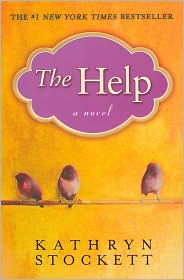 The Help tells the story of three women living in Jackson, Mississippi during the 1960s. Ms. Skeeter is a young woman trying to find her place in the world. She is a struggling author who decides to write about the plight of the African-American domestic help living in her community. Through her we are introduced to Aibileen, a gentle woman whose patient and caring nature often brings the voice of reason into situations and Minny, a spunky woman who has trouble holding her tongue and as a result, her job as well. This book came highly recommended by a friend and does not disappoint. This is Kathryn Stockett's first book and she did a fine job. 544 p.
Monday, February 7, 2011
"Never Deceive a Duke" by Liz Carlyle

Sunday, February 6, 2011
The Curious Case of Benjamin Button: F. Scott Fitzgerald

I signed up for DailyLit a few years ago, but couldn't get used to the format (you're emailed a short section of each book however often you indicate--in my case, it's daily). I'm trying it again now, but with shorter selections...attention deficit makes it hard for me to read just one page a day of a 300-page novel!
It surprised me how sad I felt reading this. I'd heard it was humorous, so I was expecting a far less melancholy story, but the description of Button's love for Hildegarde was heartbreaking, as well as his "growth" from an old man to a newborn.
11 DailyLit 'sections'; couldn't find exact page numbers anywhere online. Perhaps 25 or so?
Star Wars: Fate of the Jedi: Vortex, by Troy Denning

audio: 14.5 hours | print: 400 pages
Squirrel seeks chipmunk, by David Sedaris and others.

audio: about 3 hours | print: 159 pages
Friday, February 4, 2011
Heart On My Sleeve: Ellen Wittlinger

Guilty Pleasure alert!
I adore YA Lit. I think it's come a very long way since even I was a kid (although it's been argued that Catcher in the Rye would have been a YA novel had it been released in the 21st century), but even if it hadn't come a long way, I'd still love it. *Especially* in epistolary form!
If a book is classified as epistolary fiction, I am far more likely to read it (if it isn't already within a genre I'm comfortable with). Something about feeling like I'm nosing into people's lives a little more (even though it's fiction!)...or that it feels like I'm reading a bunch of short chapters, which I always enjoy...
Although I love reading, I don't love reading books that are too difficult. Reading is an escape for me, and I don't feel like stopping to look up words or rereading paragraphs that I don't understand. I feel like I have a pretty good grasp on the English language, so this preference doesn't limit me too often (although you'll never see me reading Joyce). But in general, YA books are a bit more accessible than so-called 'adult fiction,' so I almost always like them, and will try unfamiliar genres in YA lit far before I'd try them otherwise.
This book was a mite fluffy, but ended up being a little deeper than I'd expected. I fully enjoyed reading it, and spent about three days catching pages here and there until I was finished.
219 pages.
Tuesday, February 1, 2011
"Columbine" by Dave Cullen

I remember when the massacre at Columbine High School happened back in 1999. The mass media was all over the place; unfortunately, they got most of the story wrong. Writer Dave Cullen was there from the beginning interviewing the survivors, their families, the school staff, the killers' friends, law enforcement, and even journalists covering the story. All of the myths that grew out of the massacre really were just myths perpetuated by the mass media. For example, the boys did not target jocks, they did not belong to the Trench Coat Mafia, and they did not ask one of the victims if she believed in God before they killed her. Cullen tries hard to get the details right with a timeline before the massacre, a large notes section, and even a bibliography naming his sources. He also has a web site with more information: http://www.davecullen.com/columbine.htm. In the end, two very different boys committed mass murder at their school for very different reasons.
The book jumps back and forth between planning for the massacre, carrying it out, and the repercussions that followed. The writing is straightforward but captivating. It's hard to imagine the terror and sorrow that so many people experienced because of these two boys, but a few good things did come out of it. I would recommend this book to anyone interested in the true story behind this tragedy. 358 pages.
Subscribe to:
Posts (Atom)