Welcome to the MOSL Book Challenge


Showing posts with label biology. Show all posts

Saturday, August 22, 2020

Don't Know Much About History...

Heavenly BodiesHeavenly Bodies by Paul Koudounaris

In the late 16th century, a new section of the Roman Catacombs were discovered. The Church recognized the skeletons as those of Early Christian martyrs, and sent them to Catholic churches as saints across Germanic Europe. The relics were then richly adorned with jewels and costumes, and the laity came on long pilgrimages to pray at their shrines. While the tradition fell out of practice by the 19th century, many of these relics are still found in churches across Europe. Koudounaris presents this photographic history with his beautiful, and enthralling images. This book is just way too cool!

189 pages

Kinloch: Missouri's First Black City (Black America Series) by [John A. Wright Sr.]
Kinloch: Missouri's First Black City by John A. Wright

Longtime resident John A. Wright has collected photos and interviews to tell the story of Kinloch, located north of St. Louis. Going from wealth and luxury, white flight, school desegregation, as well as church and community life, the book gives an overview of this city's history. While Kinloch itself is in decline, a population shift has retained much of its heritage in nearby Ferguson.

128 pages


An American PlagueAn American Plague by Jim Murphy

I wasn't sure I wanted to read a plague history right now, given.... you know. But this book on the 1793 Philadelphia plague felt distant enough that I didn't mind reading it. Although it is technically juvenile nonfiction, this is definitely a book that can be enjoyed by all ages. Murphy is very good at telling the stories of the main doctors and public officials involved in the crisis, as well as the vital role of the Free African Society. The discussion on the various theories of causes for the (pre-germ theory) plague were telling-placing blame on foreigners is certainly not new. This book is an engaging and informative read. I've also read his book, The Great Fire of Chicago, which is also fantastic!

Little Town on the Prairie165 pages


Little Town on the Prairie by Laura Ingalls Wilder

You know, for the most part I really liked this one. You see Laura really start to grow up and participate in the social conventions of the era. The sociable! Lunatic fringes! Name cards! I couldn't imagine having to wear a corset. I made the mistake of googling "corset damage" and the images gave me nightmares. The story is quite pleasant until the end. That minstrel show... Yikes.

307 pages


Don't know much Biology...
Entangled LifeEntangled Life by Merlin Sheldrake

This book is definitely not to everyone's tastes, but I freakin' loved reading about the history and cultures around fungi, mushrooms, lichens-everything! Did you know fungi were the first to colonize land, forming giant towers as prototaxes? Or that mychorrhizal fungi form vital connections in a forest, swapping nutrients and "feeding" younger and weaker trees? Scientists are testing the chemicals in psilocybin mushrooms for potential treatments for anxiety and depression! And yes, Star Trek collaborated with Paul Stamets, an actual mycologist, to develop Discovery's fictional mycelial network, designed by Lt. Commander... Paul Stamets.
352 pages


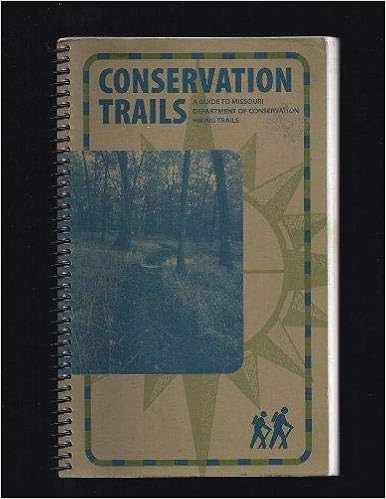
Conservation Trails by Teresa Kight/ MO Dept. of Conservation

So many great trails and Conservation Areas to explore in Missouri! While this publication is a bit dated, most of these trails haven't changed much in the past decade or so... It gives me some ideas of places to explore once this whole mess has blown over...

96 pages


A Guide to Missouri's Snakes from the MO Dept. of Conservation

Sneks. Everybody loves snakes, right? No? Only me? ... okay. We have sooo many watersnakes. And unfortunately they get killed for no good reason because folks assume any snake in the water is a cottonmouth. Copperheads are nasty. I remember killing one once with a garden hoe. And baby rat snakes are the cutest thing ever!

59 pages
The Lost Words


The Lost Words by Robert MacFarlane

This oversize book focuses on words disappearing from children's lives, pairing poems with pages and pages of colorful paintings. Each poem focuses on a word-bramble, wren, acorn-that may or may not enter children's vocabularies with our increasingly indoor culture.Beautiful poetry. Gorgeous artwork.

128 pages


Don't know much about geography...
Yellowstone
Yellowstone: A Journey Through America's Wild Heart by David Quammen

Quammen combines tales of his adventures in America's first national park with breathtaking images of wildlife and the landscape. The nature photography is phenomenal! I enjoyed reading about the history of the park and challenges it faces today. I've never been able to visit, but I definitely want to take a road trip now...
A Gentleman in Moscow
222 pages

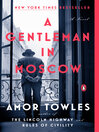
A Gentleman in Moscow by Amor Towles

I've been recommended this book many times. Then DBRL chose it for the One Read... and I caved. Surprisingly, I really enjoyed it! It follows the story of Count Alexander Rostov, who is sentenced to house arrest by the Bolsheviks in the Metropol. Across from the Bolshoi, the Metropol is a grand hotel (I've been there, it's huge) yet I'm sure it would feel tiny after 40-ish years. I enjoyed how the Count watched the passage of early Soviet history. The author definitely did his research, which I appreciated. The hype around this novel is not over exaggerated!

462 pages

 
Don't know what a slide rule is for...
Me neither, dude. I had to look it up. Makes me real grateful for calculators.

This song is now stuck in your head!
That, or you're trying to look up the reference.
You're welcome.

What a wonderful world this would be.

Monday, April 6, 2020

Where the Crawdads Sing by Delia Owens

This is one that my mom gave me to read, and I actually read it in one sitting. Do I think this one will stand the test of time? No, but it was a good read and I highly recommend it as a pandemic binge read!

Pages: 384

Friday, September 7, 2012

Some We Love, Some We Hate, Some We Eat

by Hal Herzog

A fascinating set of moral mental exercises that left me squirming with discomfort. Herzog looks at the irrational and contradictory attitudes humans have toward other animals. He claims he doesn't want to change your mind, but wants you to think about your relationship with animals in another way. He certainly poses some difficult questions that make one think.

audio: 11.5 hours
text: 326 pages

Saturday, July 21, 2012

Mushroom, by Nicholas P. Money

A interesting read by an author who has an infectious enthusiasm for his subject. Though he somehow unfortunately manages to stray into politics at some points in the book, Money makes the bizarre world of fungi accessible. I learned a number of things about fungi that are at odds with what I was taught at school. According to Money, many of our notions regarding fungi are wrong and more research is needed to make up for a dearth of understanding in the field of mycology.
The sheer breadth and variety of fungi Money describes are interesting in their own right. The descriptions of the quirky individuals who study fungi make it even more so.

text: 201 pages

Tuesday, May 22, 2012

Riddled with life: friendly worms, ladybug sex, and the parasites that make us who we are, by Marlene Zuk

Another fascinating read from Marlene Zuk. She takes us far from what is commonly known about parasites and introduces us to their infinite variety and what they can do. We often associate parasites with wasting away, but there are some that actually lead to the infected organism growing larger. You may spot an impressively large crab, but it may have less to do with its vigor, and more to do with the parasites it's supporting. There are other parasites that actually extend the life of the host (though the host may be rendered sterile as part of the bargain). There are still others that sound like the inspiration for the chest-burster in the Alien films (but for crickets, instead of humans). She even discusses the parasites of other parasites. Zuk presents a mix of well-tested theories, as well as some cutting edge hypotheses regarding parasites, and she is scrupulous about identifying which is supported by a large body of evidence, and which are currently the mere musings of scientists. Some of these musings include speculation as to how parasites may affect our personalities, our propensity for accidents, our suspicion of others, our height and a whole host of other factors.

text: 328

Wednesday, April 25, 2012

Sex on six legs, by Marlene Zuk

A very interesting book with an unfortunately sensationalistic title. This book is about many aspects of insect life and behavior. There are many instances in this book that reinforce the notion that the truth is stranger than fiction. Marlene Zuk has a way of writing about her topic with authority, but in a way that is also accessible. I appreciate how she admonishes scientists (and us) to avoid applying our own preconceptions and motivations to the behavior of other organisms.
text: 262 pages

Tuesday, July 26, 2011

The Immortal Life of Henrietta Lacks by Rebecca Skloot

(Posted for Ann Roberts) 
 I finally read The Immortal Life of Henrietta Lacks by Rebecca Skloot after a detour through The Evolution of Calpurnia Tate. I read that one during one of those months that I forgot to blog.  I ordered Calpurnia Tate through MOBIUS, much like I have done with most of the books that I read (I actually use library  services for the purpose of reading) and after reading the first couple of pages, realized it was not the book I thought I had ordered. I read it anyway. You can see why I would have made that mistake, can’t you?  Evolution, immortality, two VERY old-fashioned names-it was a perfectly reasonable mistake. But I digress. 
The Immortal Life of Henrietta Lacks is almost one of those “truth is stranger than fiction” stories, or at least it is to me, not being versed in the practices of cell research. Henrietta Lacks was a poor African-American woman whose cancer cells were taken, without her knowledge, in the 1950s by a researcher who was very interested in growing cells in culture, and whose unwitting contribution to science has led to the development of the polio vaccine, provided research cells for cancer research, and assisted scientists in advances in in vitro fertilization, cloning and gene mapping.  These cells, called HeLa cells, are still in production and use today and the quantity of HeLa cells produced over the decades would weigh 50 million metric tons and have been bought and sold by the billions.
The Lacks family, a hardscrabble, inner city Baltimore family, has struggled through the years to understand the usage of their matriarch’s cancer cells, as well as a system which allows medical scientists and drug companies to profit from the use of cells from an individual without consent, while they struggle to maintain health insurance.  Did you know that if you’ve had a mole removed the material that is taken from your body doesn’t automatically get destroyed? According to this author, anyone’s tissues might be sitting in a lab somewhere waiting to be used for some research purpose. The medical community figures if we’ve left it behind, we don’t have any right to it anymore and they might as well use it, and profit from it.  Strange indeed.
At any rate, this book was infinitely better than Calpurnia Tate to me, as am I’m not a fan of books written for teens and tweens at this point in time and space.  I think it has something to do with being over 50 and childless.
369 pages