Welcome to the MOSL Book Challenge


Tuesday, October 30, 2012

Pierre the Penguin by Jean Marzollo.


Pierre, an African penguin who lives at the California Academy of Sciences, prefers warmer climates.  He loses his feathers and then he can’t swim because he is too cold. His handler, Pam, designs a neoprene wetsuit that keeps him warm while he is swimming. His feathers eventually grow back.

This is a true story for elementary age children. They will enjoy reading about Pierre, and at the end of the book is a page of 'Q&A With Pam' that has questions such as ‘What is neoprene?’.  A very good book with an enjoyable story and great information about penguins.
Show-Me Award Nominee, 2012-2013.
32 pages

Stand Straight, Ella Kate by Kate Klise

Ella Kate Ewing was born in 1872. Although she was a regular-size baby, when she was 7-years old she started growing at an alarming rate.  By the time she was 17, she was 18 feet tall and took a job as an attraction in a Chicago museum, despite her parent’s reluctance.  This book of biographical fiction for children is a delightful tale. Although Ella Kate was often considered a freak by others, she never allowed herself to accept that. Instead, she accepted her unique gifts, and lived a full and happy life.
 
Show-Me Award nominee, 2012-2113.
32 pages


Eye of the World by Robert Jordan

The first book in the epic fantasy series The Wheel of Time, the Eye was originally published in 1990 and the 14th and final book is due out on January 8, 2013 with author Brian Sanderson finishing the series after Jordan's death in 2007. The book centers around three young friends who are forced to flee their isolated village with a mysterious woman who believes they are the key to saving the world from an ancient evil.

I am rereading the series in anticipation of the release of the final book in the series. In many respects the first book is probably one of the weakest. Most of the first book is told from the perspective of the main character Rand al'Thor, while the later books are told from the perspectives of a number of characters. Going back through the book it is clear that Jordan has a very clear vision of his world and the things he wants to do later, but with some of the following books it is also clear that he doesn't really know how his world works. It fits together later as the books have a much broader and sweeping story, but early it seems awkward at times and the characters have relatively little depth. Still it is a good start for a long and complex series that is well worth the time to read.

Pages: 782

Warhammer 40,000: Priests of Mars by Graham McNeil

In the grim darkness of the far future, there is only war. Archmagos Lexell Kotov of the Adeptus Mechanicus, an Imperial Cult dedicated to worshipping the Machine God, is preparing to lead a fleet of exploration beyond the borders of the Imperium of Man. With the last of his holdings destroyed by various catastrophies Kotov has staked his position and everything his has on one desperate quest to find a lost exploration fleet and a mysterious artifact called the "Breath of the Gods" which he believes will bring about a new golden age. He has assembled a mighty fleet and stalwart warriors to head it. Roboute Surcouf a rogue trader, a privateer santioned by the Imperium to travel and trade where others dare not. The genetically engineered super-soldier's of the Black Templar chapter of the Space Marines. The mammoth war machines of the Titan Legio Sirius. The stalwart Imperial Guardsmen of the 71st Cadian regiment. Against them are arrayed horrors beyond all imagining.

The first in a two part series set in the world of Warhammer 40,000 (often called 40k), the Priests of Mars is a pretty decent entry into the large body of 40k fiction. McNeil does a good job navigating the large number of factions, goups, and characters and makes them work very well. Often 40k fiction will bog down on how ridiculously over the top the setting. To an extent it does get bogged down in Mechanicus psuedo-science techno babble, but the plot keeps moving at a reasonable rate. The story is dark and while somewhat slow, it is packed with the gritty action the series is known for.

Pages: 317

Monday, October 29, 2012

The Innocent / David Baldacci

Government hit-man Will Robie saves the life of a teenager on the run as he himself is escaping a job gone horribly wrong.  As he struggles to find out who has a target on his back, he realizes that the girl is also caught up in a murderous plot intertwined with his situation.  He doesn't know who he can trust, but manages to unravel the mystery in time to thwart a terrorist plot.  422 p.

Plum Pudding Murder by Joanne Fluke


(Posted for Paul Mathews)

Baker Hannah Swenson solves the murder of the Christmas tree lot owner. There are many suspects and his bullet riddled big screen TV.  Lovely Christmas party at the end of this book. 

Print:  256 pages.
Audio:  7 hrs. 30 min.

Calico Joe by John Grisham


(Posted for Paul Mathews)

Calico Joe came up to the Chicago Cubs through their farm system, and a batting superstar. His promising career ended on the day when a baseball was thrown and hit him in the head. Thirty years later the pitcher and batter met, a good understanding for both men. 

Print:  208 pages.
Audio:  5 hrs. 23 min.

The Unbearable Book Club for Unsinkable Girls

Author:
Pages: 240


Cover Blurb: I'm Adrienne Haus, survivor of a mother-daughter book club. Most of us didn't want to join. My mother signed me up because I was stuck at home all summer, with my knee in a brace. CeeCee's parents forced her to join after cancelling her Paris trip because she bashed up their car. The members of "The Unbearable Book Club," CeeCee, Jill, Wallis, and I, were all going into eleventh grade A.P. English. But we weren't friends. We were literary prisoners, sweating, reading classics, and hanging out at the pool. If you want to find out how membership in a book club can end up with a person being dead, you can probably look us up under mother-daughter literary catastrophe. Or open this book and read my essay, which I'll turn in when I go back to school.


This book was amusing at times and somewhat enjoyable. I would say a 3 out of 5. I didn't like the ending and some things weren't explained thoroughly by the author.

Friday, October 26, 2012

BattleTech: Star Lord by Donald G. Phillips

It is the year 3057. It has been nearly three hundred years since Stefan Amaris murdered the First Lord of the Star League and launch an age of merciless war. Humanity has begun to recover from the Succession Wars and from the shadows a descendant of Amaris the Usurper has begun a secret plan to depose the rulers of the Successor States and rule the galaxy. Against him is arrayed a ragtag band of soldiers and misfits who must infiltrate his organization and bring him down.

As with most sci-fi series written by multiple authors, BattleTech can be pretty hit or miss and Star Lord is definitely a miss. Stefan Amaris has always been played as one of the most horrible tyrants and despots in the setting's history and his secrete heir is pretty lame. His plans are lame and doomed to fail. As a villain he falls flat on his face. The author spends way too much time trying to create a cast of characters that are pretty boring and uninteresting. They are flat and dull. I had been looking forward to this one a lot, but it was ultimately a big let down. If the series editors were truly interested it this they should have taken their time and built it into something like the later galaxy spanning conflicts that occur in later BattleTech novels and story lines.

In the end, the book is boring and uninteresting.

319 pages.

Thursday, October 25, 2012

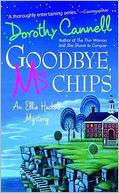
Goodbye, Ms. Chips by Dorothy Cannell

In Goodbye, Ms. Chips, Ellie Haskell returns to Saint Roberta's, a boarding school for girls, to help locate a missing trophy before dishonor is brought upon the institution. However, a missing trophy turns out to be a minor matter compared to murder.

I chose this book because I vaguely remembered hearing good things about the author and this series in particular. I thought it was an okay story with some witty dialogue, but not much of a mystery. 295 pages.

The Immortal Life of Henrietta Lacks by Rebecca Skloot

Henrietta Lacks was a poor, young African-American mother of 5 when she died of cervical cancer in 1951. The doctors treating her took cells from her tumor without asking - a common practice.  Those cells became the first human cells to be successfully grown in culture. They became one of the most important tools in medicine, and have been used in developing the polio vaccine, cloning and gene mapping, among others. Those cells have been, and still are, bought and sold by the billions.

Yet, the woman herself has remained almost unknown. Countless researchers and companies have profited from her cells, but her family is unable to afford health care. For two decades after her death, they didn’t even know that her cells were alive and being used.

Rebecca Skloot brings us the story of Henrietta and her family. There is a lot of scientific information in the book also, but her main objective in writing the book was to find out who Henrietta Lacks was, and tell her story.

It is a compelling story, and one that needed to be told. It made me aware of a lot of medical ethics issues that I was unfamiliar with. It’s very thought-provoking, yet very readable.

400 pages

Lucky Beans by Becky Birtha


It was the Great Depression, and young Marshall’s Dad has lost his job. Ma cooks beans for supper every night, and Marshall is sick of beans! Ma says be grateful you have food to eat, but Marshall is finding it hard to be grateful for all those beans!

Then one day he sees a big jar of beans in the window of the furniture store, with a sign that says ‘Guess how many beans are in the jar, get a new sewing machine’.  If Ma has that sewing machine, Marshall knows she could make money by sewing. But how can they figure out how many beans are in the jar?

Marshall uses the math he is learning in school to come up with a creative way to count the beans.

A Show-Me Award nominee, 2012-2013.

32 pages

In the Sanctuary of Outcasts by Neil White

Neil White was a successful magazine publisher with a lovely wife, two beautiful children, a gorgeous home, and an office full of awards. He was living the high life. What no one knew was that he was sustaining his life style and his business by kiting checks.  After bank auditors uncovered his scheme, he was convicted of bank fraud and sent to federal prison.

He was ordered to report to the Federal Medical Center in Carville, Louisiana. What he didn’t know then was that it was the United States national leprosarium. People with leprosy were forcibly quarantined at its remote location on the Mississippi River, beginning in 1894. By the time White was incarcerated, the number of patients had dwindled due to medical advances in treating the disease. Since there were hundreds of empty beds, the Bureau of Prisons transferred federal convicts to the institution. Prisoners lived on one side of the old Carville Plantation grounds, and patients on the other. They were to have no contact with one another.

This memoir is about White’s experiences during the year he spent in Carville. He had been all about appearances, and now he found himself surrounded with people with deformities and disfigurements, as well as thieves, hoodlums and other crooks.  He decided he would not be a federal convict; he would pretend to be an inmate. He pretended to himself that he was an ‘undercover journalist” doing an expose on why the government decided to experiment with mingling inmates and lepers.

But a funny thing happened on the way to the expose.  As he interacted with inmates and patients, he learned a lot about people, and a lot about himself. My favorite quote from the book: “Intimate, prolonged contact, it seemed, made everything commonplace. Beauty and disfigurement disappeared with familiarity.”

I really enjoyed this book. It is as much a journal of self-discovery as a story of a year in prison. It reads much like a novel.

Highly recommend.

352 pages

Mo Down South (A Short Story Omnibus of Historical Fiction) by Katrina Parker Williams


Four short stories .  In ‘ Slave Auction’, after the master of a plantation dies, his heirs sell off his slaves. Four-year-old Horatio, who has always been safe and secure, living in a cabin with his mother, is ripped from her arms and sold at auction.

In ‘Missus Buck’  young Horatio is bought by a plantation owned by Missus Buck’s son. Missus Buck believes her son married beneath him, and consequently treats her daughter-in-law with contempt, which also extends to the plantation slaves. When her son takes his family on a trip, leaving her in charge, her mistreatment of the slaves leads to dire consequences.

In ‘The Dust Storm’, set during the Great Depression, Muriel and her husband Palmer are trying to eke out a living on a small farm in the Texas Dust Bowl. It has been a hard year for the family, and Muriel wants to give up and go back East. But the idea of owning his own farm has been Palmer's dream all his life. Will Muriel leave without him?

In ‘The Hankering’, Miss Carmelia Faye Lafayette runs away from an abusive home when she is 16. She meets Hank at a traveling minstrel show, marries him, and they travel all over Mississippi and Louisiana with the show. They save their money and buy ‘The Hankering’, a juke joint in Mississippi. After Hank is killed in a knife fight, Miss Carmelia runs the joint by herself.

I’m not a big fan of short stories, and I didn’t find these particularly well-written.

86 pages


The Dressmaker of Khair Khana : Five Sisters, One Remarkable Family, and the Woman Who Risked Everything to Keep Them Safe by Gayle Tzemoch Lemmon


Kamila Sidiqi’s life changed dramatically when the Taliban seized control of the city of Kabul during the Afghanistan civil war. Kamila was 19 years old; she had just received a teaching degree. But the Taliban banished women from the public square. They were not allowed to work; if they went outside their homes, they must be accompanied by a male relative, and be completely covered by a burqa at all times. They were not allowed to speak to a man, even a shopkeeper, and were often beaten in the streets for a slight offense.

When her parents and brother had to flee the city to escape the Taliban, Kamila became the sole breadwinner for her five siblings. But she wasn’t allowed to leave her home to go to work, so she had no way to support the family. She decided to start a tailoring business; she and her sisters would make women’s clothing in their home. By sheer determination, she created a thriving business, and branched out into educating other women on how to do the same.

This book was written by a journalist who met Kamila after the U. S. invaded Afghanistan in 2001. Gayle Lemmon wanted to tell the story of women entrepreneurs.  This is a true story that reads like a novel, about sisterhood, family and resilience in the face of unimaginable living conditions.

Highly recommended.

 304 pages

The Blue House Dog by Deborah Blumenthal


Bones the dog lives in a blue house with his owner. When his owner dies, Bones becomes a stray, wondering the neighborhood looking for scraps. Cody lives down the street from the blue house, and his dog has died.  Cody tries to befriend Bones, who is skittish and distrustful of people.  But with patience, Cody slowly gets Bones to trust him, and they become a pair.

This is a very gentle story about a dog and a boy finding each other and dealing with grief.  It is a Show-Me Award nominee this year.


32 pages

Wednesday, October 24, 2012

"Dewey: The Small-Town Library Cat Who Touched the World" by Vicki Myron with Bret Witter

I had been putting off reading this book because I knew that it would make me cry, and it did.  But it was still worth it to get to know Dewey Readmore Books, the beloved cat who lived in the Spencer (IA) Public Library.  This was not only his story but a brief history of the town and a partial autobiography of Myron.  Some chapters hardly mentioned Dewey at all, and I found those to be the least interesting parts of the book.  Dewey had a huge personality and a true love of people that Myron used to bolster the library's image and reputation, but she truly loved him, too, and felt that he was her special boy.  My favorite parts were the photos of  Dewey at the beginning of each chapter.  As you can tell from the cover, he was one gorgeous cat!  288 pages.

Tuesday, October 23, 2012

Trick of the Light

by Louise Penny

Clara has finally caught a break. After decades of producing art she suspected was just weird and no good, she has a show at a prestigious gallery. The reviews are in, and gallery owners are now competing for her work. So why isn't she ecstatic?

A woman was found murdered in her garden.

Strangers from her past are reappearing unbidden into her life.

She is forced to face some uncomfortable facts about her husband and their relationship.


audio: 13 hours
text: 339 pages

Monday, October 22, 2012

This Body of Death

by Elizabeth George

Detective Inspector Lynley is coaxed back to the Met following the murder of his pregnant wife. With the presence of acting superintendent Isabelle Ardery, strange alliances form.

As Margaret mentioned in her post, multiple mysteries are interwoven in this book.

audio: 26 hours
text: 692 pages

Sunday, October 21, 2012

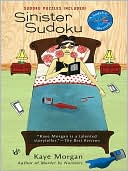
Sinister Sudoku by Kaye Morgan

Sudoku creator and amateur sleuth Liza Kelly is caught in a snowstorm at Killamook Inn. Good food, a nice place to stay - it shouldn't be a hardship. Unfortunately, as she settles into bed for the night, she discovers she is not alone - there is a body buried in the mattresses.

This was a quick read, somewhat disappointing in its plot and characters. If you are looking for a good series featuring puzzles, I recommend Parnell Hall's The Puzzle Lady series instead. 217 pages.

Thursday, October 18, 2012

Salvation in Death by J.D. Robb

The congregation looks on horrified as their priest dies during the middle of a funeral service. To make it worse, the cause of death is murder by poison - and the victim wasn't really a priest. While investigating the crime, Eve Dallas must confront some difficult events of her past. This was the first book I read in the In Death series. I'm intrigued enough to try another. I suspect it is best if the books are read in order. 355 pages.

Monday, October 15, 2012

Unnatural Acts by Stuart Woods


(Posted for Paul Mathews)

Billionaire’s son is in the college/drug business. F B I  murderer is back. Another book with action aplenty.  307 pages.